

Quick Answer
Paintless dent repair (PDR) is usually worth it when the paint is intact and the dent is shallow, smooth-edged, and reachable from behind the panel. It typically costs less than body work and takes hours instead of days. If the paint is cracked, the metal is sharply creased or stretched, or the dent sits on a panel edge, you'll probably need conventional body work.
Questions about your car? Call us or book online. Walk-ins are welcome.
Call (415) 440-5353What paintless dent repair actually is
PDR removes a dent without sanding, filler, or repainting. A technician works the metal back to its original shape, usually with specialized tools from behind the panel, or by gently pulling from the outside with glue tabs when the back isn't reachable. Because the paint is never touched, the factory finish stays on the car and there's no color to match.
We do paintless dent repair as part of our auto body and collision service, and we'll tell you at the estimate whether your dent is a good candidate.
Is my dent a good candidate for PDR?
| Situation | PDR likely? | Why |
|---|---|---|
| Shallow, round dent with intact paint | Often yes | The metal can be massaged back without disturbing the finish. |
| Door ding in the middle of a flat panel | Often yes | This is the classic PDR job: open metal, good access. |
| Cracked, chipped, or deeply scratched paint | Usually no | PDR can't fix paint. Damaged paint has to be refinished. |
| Sharp crease or fold in the metal | Sometimes | Depends on how deep and sharp it is and where it sits. A technician has to look at it. |
| Dent on a panel edge or body line | Often not | Edges and body lines are stiff and hard to reshape without leaving marks. |
| Stretched or crushed metal | No | Once metal has stretched, it can't be pushed back to its original shape. |
| Aluminum panel | Sometimes | Aluminum is harder to work, and some shops won't attempt it. |
| Large collision damage | Usually no | Bigger impacts usually need panel repair or replacement. |
- PDR likely?
- Often yes
- Why
- The metal can be massaged back without disturbing the finish.
- PDR likely?
- Often yes
- Why
- This is the classic PDR job: open metal, good access.
- PDR likely?
- Usually no
- Why
- PDR can't fix paint. Damaged paint has to be refinished.
- PDR likely?
- Sometimes
- Why
- Depends on how deep and sharp it is and where it sits. A technician has to look at it.
- PDR likely?
- Often not
- Why
- Edges and body lines are stiff and hard to reshape without leaving marks.
- PDR likely?
- No
- Why
- Once metal has stretched, it can't be pushed back to its original shape.
- PDR likely?
- Sometimes
- Why
- Aluminum is harder to work, and some shops won't attempt it.
- PDR likely?
- Usually no
- Why
- Bigger impacts usually need panel repair or replacement.
What does PDR cost?
| Type of repair | Typical range |
|---|---|
| Small door ding (about 1 inch) | Roughly $100 to $300 |
| Medium dent (about 2 to 8 inches) | Roughly $250 to $700 |
| Large dent or one with a crease | Roughly $500 to $1,500 or more |
| Conventional body repair and repaint, one panel | Typically several hundred dollars to $1,000 or more |
- Typical range
- Roughly $100 to $300
- Typical range
- Roughly $250 to $700
- Typical range
- Roughly $500 to $1,500 or more
- Typical range
- Typically several hundred dollars to $1,000 or more
These ranges come from published repair-cost guides, which vary a lot from one source to the next, and Bay Area prices often run above national averages. Exact prices depend on your make and model, the size and location of the dent, and the nature of the damage. The only way to know is to have someone look at it.
PDR vs. a body shop repair
| Paintless dent repair | Conventional body repair | |
|---|---|---|
| Time | Often a few hours for a small dent | Usually days, because of prep, paint, and curing |
| Paint | Factory finish stays on the car | Panel is filled, refinished, and color-matched |
| Cost | Usually lower, when the dent qualifies | Usually higher, since paint and materials add up |
| Best for | Door dings and shallow dents with intact paint | Cracked paint, creases, edges, and larger damage |
- Paintless dent repair
- Often a few hours for a small dent
- Conventional body repair
- Usually days, because of prep, paint, and curing
- Paintless dent repair
- Factory finish stays on the car
- Conventional body repair
- Panel is filled, refinished, and color-matched
- Paintless dent repair
- Usually lower, when the dent qualifies
- Conventional body repair
- Usually higher, since paint and materials add up
- Paintless dent repair
- Door dings and shallow dents with intact paint
- Conventional body repair
- Cracked paint, creases, edges, and larger damage
Neither option is better in every case. PDR is a great choice when it works, and conventional body work is the right call when it doesn't. We use modern paint-matching technology on the body-work side so a refinished panel blends with the rest of the car.
Why original paint matters
Original factory paint is often seen as a plus when a car is sold, and repainting a panel can sometimes be noticed by a careful buyer. That's one reason people lean toward PDR on newer cars when the dent qualifies. How much it affects value depends on the car, so don't let it push you toward a repair that won't work. A properly done refinish is a perfectly good repair when a dent can't be pulled.
Dings in San Francisco
Tight street parking, narrow garages, and crowded lots mean door dings and small dents are part of life here, and the holiday shopping season puts more cars in more parking lots. A small ding left alone usually doesn't get worse, but paint can crack over time and a dent near an edge can become harder to fix, so it's worth getting one looked at sooner rather than later.
What to expect when you bring it in
- We look at the dent and the paint around it, and tell you whether PDR will work.
- You get an honest, written estimate, and no work begins without your approval.
- If PDR won't do the job, we explain what will and what it involves.
- Walk-ins are welcome, or you can book online.
Frequently Asked Questions
Can every dent be fixed with paintless dent repair?
No. PDR works best on shallow dents where the paint is intact and the technician can reach the back of the panel. Cracked paint, sharp creases, stretched metal, and dents on panel edges often need conventional body work instead.
Will paintless dent repair damage my paint?
When the dent qualifies, the paint isn't touched, so the factory finish stays in place. That's the point of the method. If the paint is already cracked or chipped, though, PDR isn't the right fix.
How long does paintless dent repair take?
A small ding can often be done in a few hours. Bigger or more complicated dents take longer, and conventional body repair usually takes days because of paint and curing time. We'll give you a realistic timeframe after we see the car.
Is paintless dent repair cheaper than a body shop?
Usually, when the dent is a good candidate, because there's no filler, paint, or color matching. Typical market prices run from about $100 for a small ding to $1,500 or more for a large, creased dent. Exact prices depend on your make and model and on the size, depth, and location of the dent.
Can you fix a dent on the edge of a panel or a body line?
Sometimes, but it's harder. Edges and body lines are stiff, and the metal can be tricky to reshape without leaving marks. The only way to know is to have a technician look at it in person.
Related Services
Need a Hand With Your Car?
Honest estimates, no work without your approval. Book online or call, and walk-ins are always welcome at 1165 Folsom Street, San Francisco, CA 94103.
Mon – Fri: 8:00 AM – 5:00 PM
More From the Shop
 Auto Body
October 10, 2026
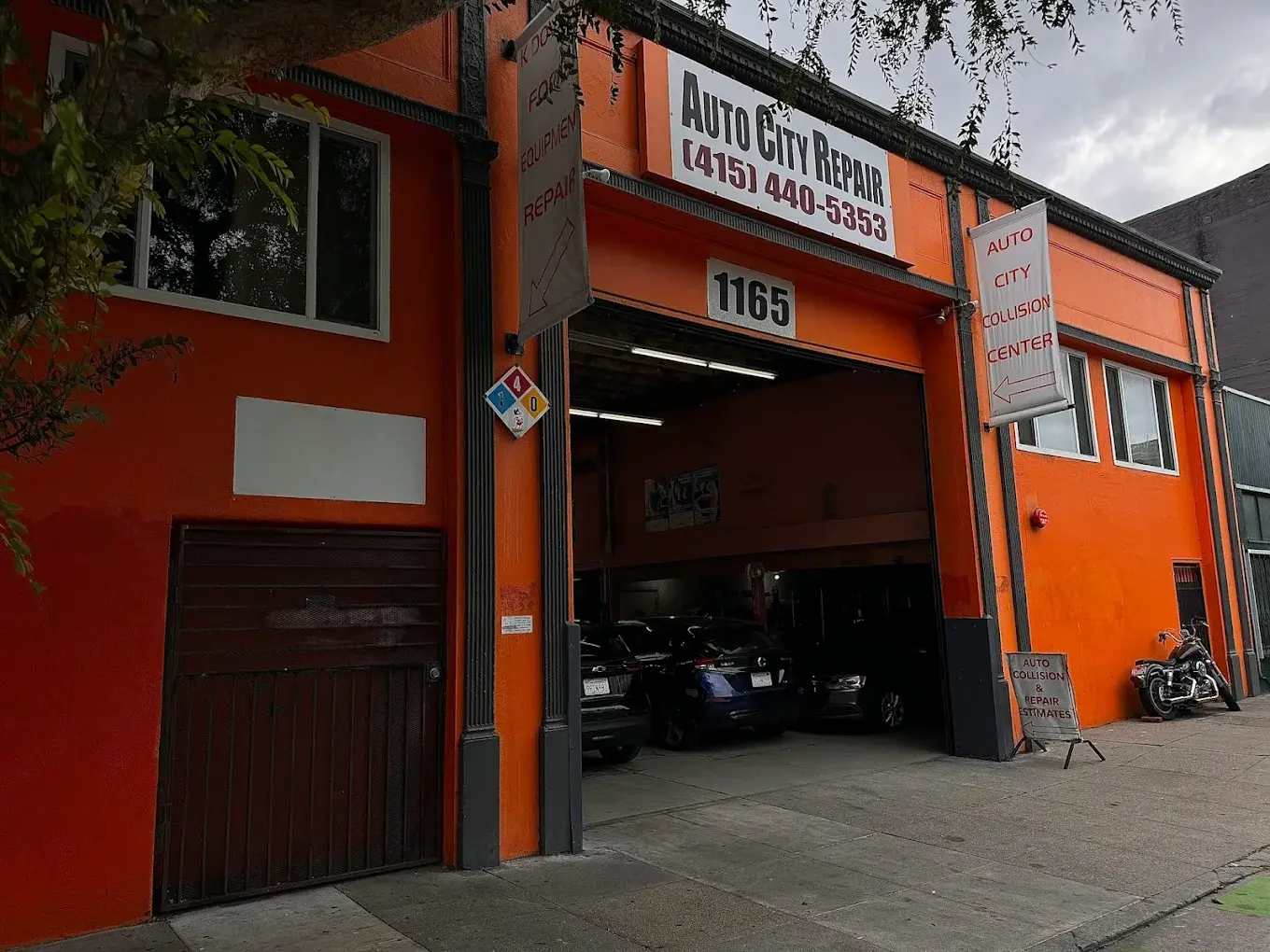
Bumper Repair or Replacement? Costs, Sensors, Paint
Scuffs and small cracks can often be repaired, but bigger damage, hidden damage, and sensors change the answer. Here's how to decide and what it typically costs.
Read More →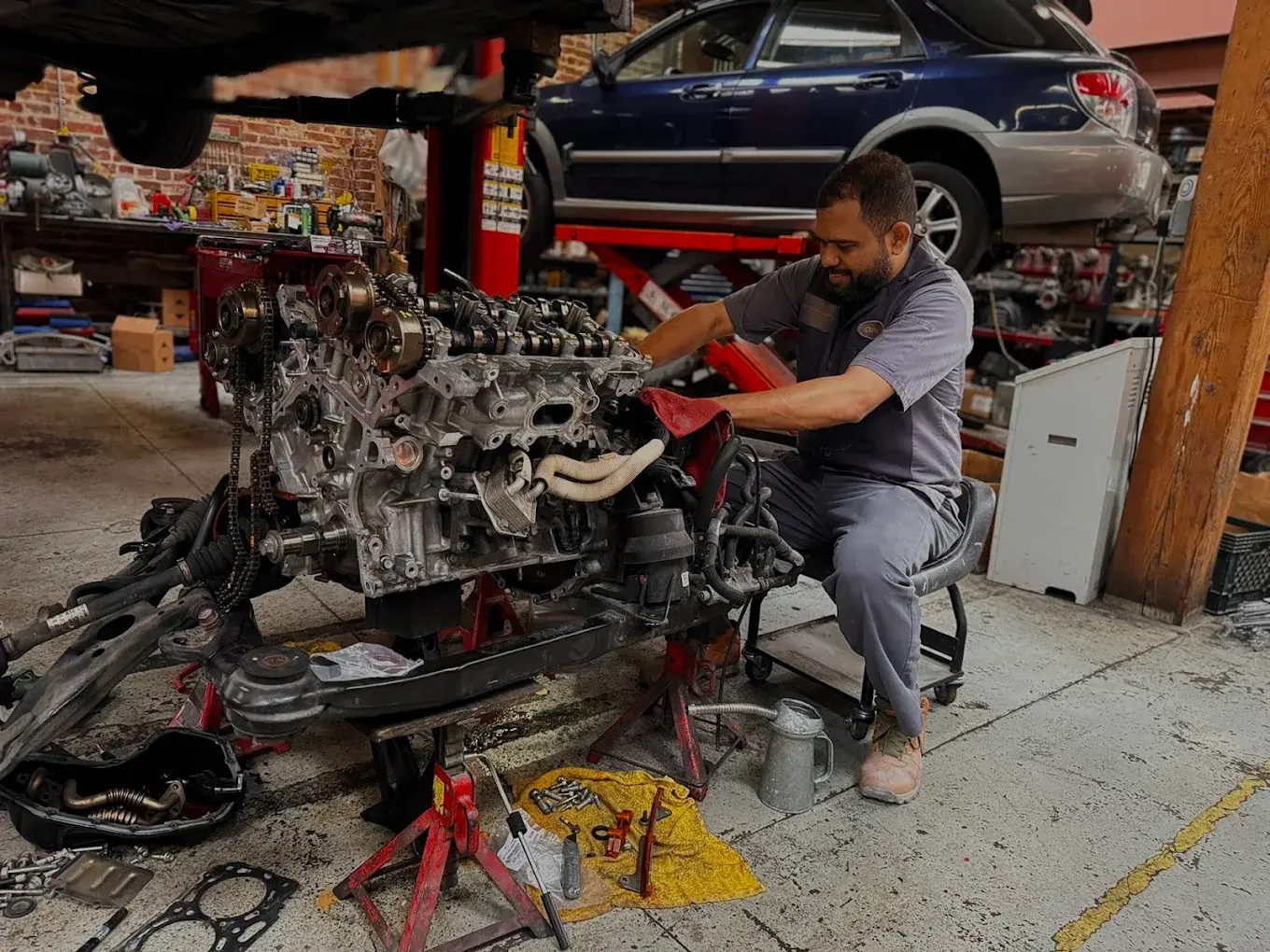 Diagnostics
October 10, 2026
Check Engine Light Flashing vs. Steady: What to Do Now
A steady light and a flashing light are two very different problems. Here's how to tell them apart, what to do right now, and what a proper diagnosis involves.
Read More →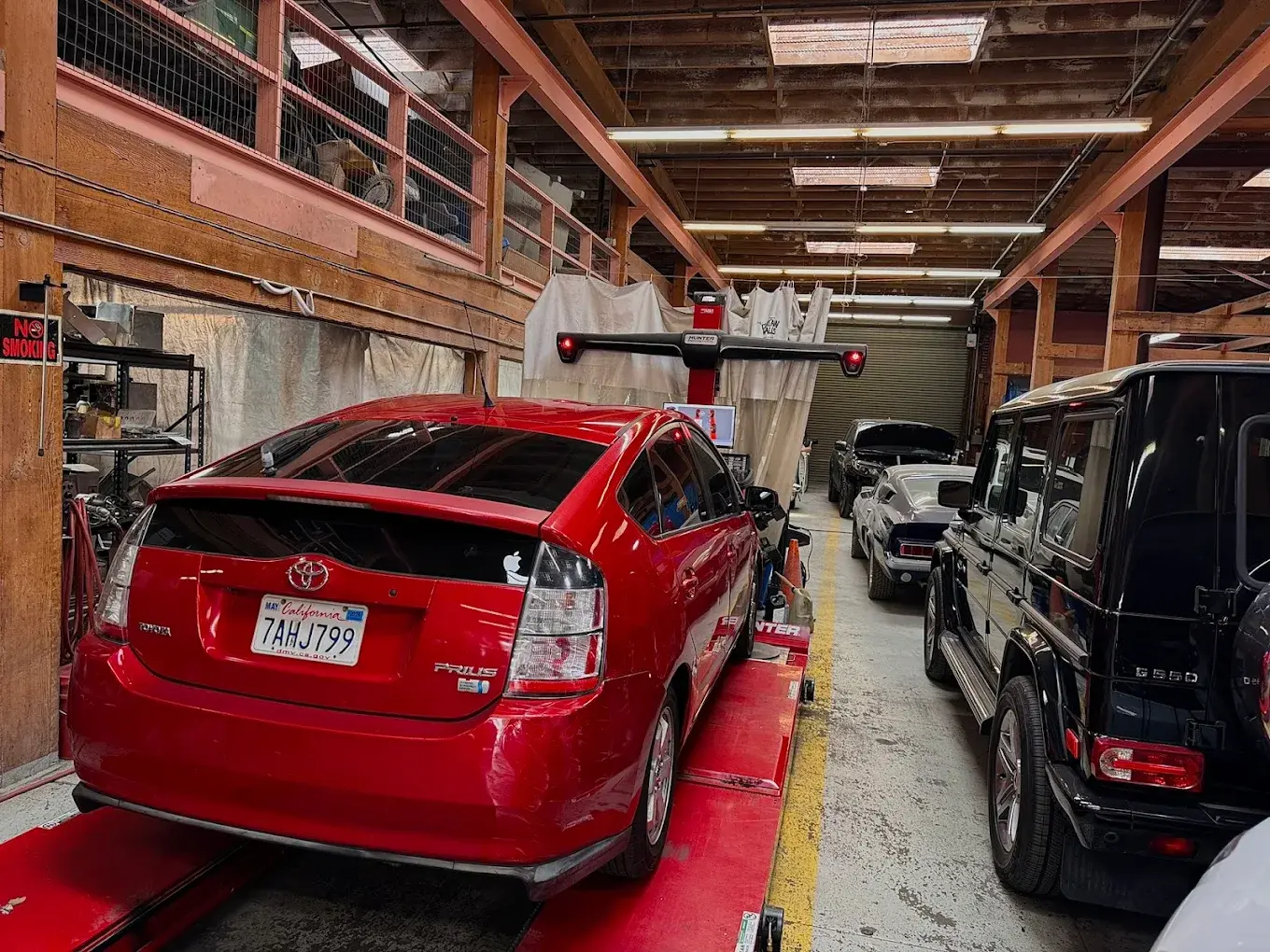 Maintenance
October 10, 2026
Rainy-Season Car Checklist for San Francisco Drivers
A strong El Niño is on the way and the clocks change on November 1. Here's a simple checklist to get your wipers, tires, brakes, lights, and battery ready.
Read More →